Introducing Axonius Security for AI to help organizations discover and govern AI assets

Kamden Schewitz
Product Marketing Manager, Axonius
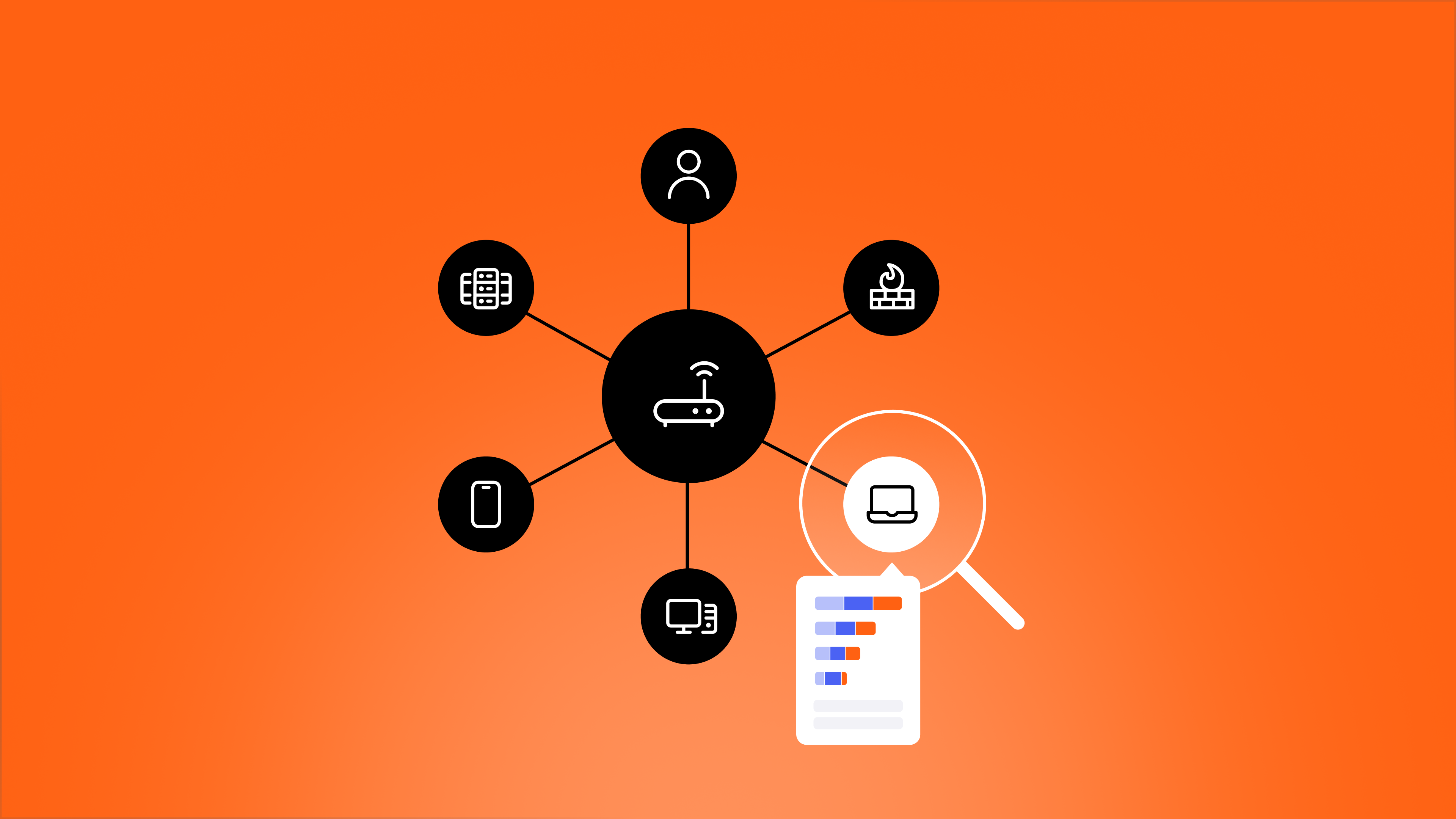
Leadership and executive teams are putting top-down pressure on organizations to adopt AI as quickly as possible. As organizations rush to meet these demands, AI tools are being introduced faster than security teams can track them. Most existing security tools only see fragmented pieces of what is actually deployed. This leaves security teams struggling to answer basic questions, like what AI applications exist in our environment? Who owns them? What data or systems can they access? And, are they training on our data?
Today, Axonius is launching our Security for AI solution to answer those questions. Security for AI makes AI a first-class asset in the Axonius Asset Cloud, and we’re building it to give you a complete picture of how AI is used across your environment. We’re starting with visibility in the AI-native and AI-enhanced applications in use across your organization, including discovering shadow AI usage.
You can also see details per app like the vendor’s AI data training stance and the autonomy level of the app. But this is just the start. We’re currently working on delivering a complete view of the AI settings configured in the app; the agents, models, and MCP servers running behind them; and the identities that own and operate each one. Most importantly, you'll know whether the right controls are in place to secure them, and take corrective action where needed.
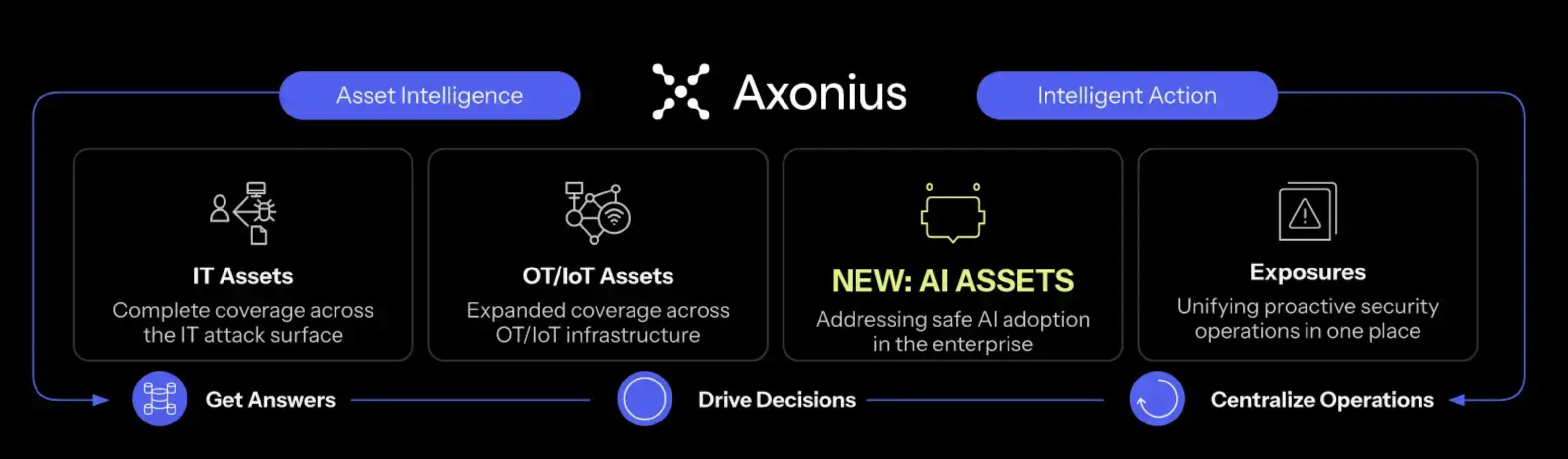
Built to provide one clear picture of AI assets
AI assets don't live in one place. They're spread across SaaS apps, identity providers, browsers, and dedicated AI platforms. No single management system for those tools sees the whole picture.
That's the core problem Axonius has been solving for nine years. We connect to the disparate security and IT systems of record you already run, then reconcile their data into one source of truth for your attack surface and exposure management. When five sources describe the same asset five different ways, we turn it into one accurate record.
AI assets don't need a new approach. They need the one that already works, applied to a new kind of asset. Security for AI pulls from identity providers, browser extensions, security and network tools, and SaaS apps to give you the same precision for AI that you get for devices, identities, and software.
Our firm foundations for AI security
Security for AI brings together powerful existing Axonius capabilities with new ones developed specifically for AI visibility and governance.
Axonius SaaS Applications show where AI arrives first. Most enterprise AI doesn't show up as a new platform. Instead, AI comes in through software you already own, as vendors ship AI features into existing apps and employees sign up for new AI tools with a click before asking permission.
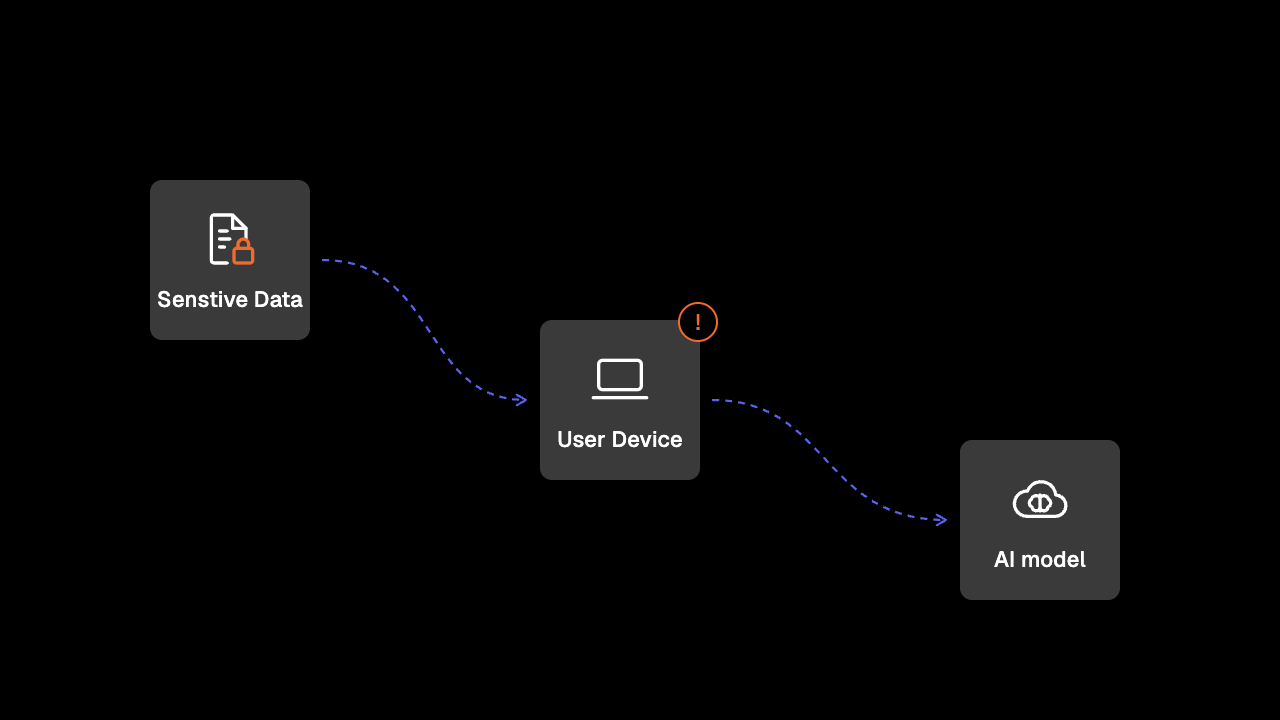
Axonius SaaS Applications discovers those apps and tracks their hygiene and risk, so visibility starts where AI spreads fastest. Our depth in SaaS allows you to see details like vendor AI data training stance and the autonomy level the application allows. If you want to find the shadow AI app on the laptop of an employee handling sensitive data, where the vendor defaults to training on your data, Axonius can now show you.
Identity asset data shows who and what AI acts as. Every AI agent runs on an identity, whether that’s a service account, an API token, or an OAuth grant. That identity’s permissions define what the agent can read, change, and send. The Axonius platform tracks the human and non-human identities behind your AI, showing who owns each agent and what it can reach. That’s the core of any AI security posture.
Net-new AI capabilities take visibility deeper. On top of that foundation, our Security for AI solution will add capabilities designed specifically for AI. You will be able to see how each app uses AI, inventory the models, agents, and guardrails on AI platforms, and check AI settings against your policy. These capabilities are developed directly into Security for AI and will keep expanding over time.
Shadow AI discovery
Announced today as generally available, the first capability is Shadow AI Discovery. With enrichments to more than 200 of SaaS application adapters, you can now see whether each app in your environment is AI-native, AI-enhanced, or AI infrastructure.
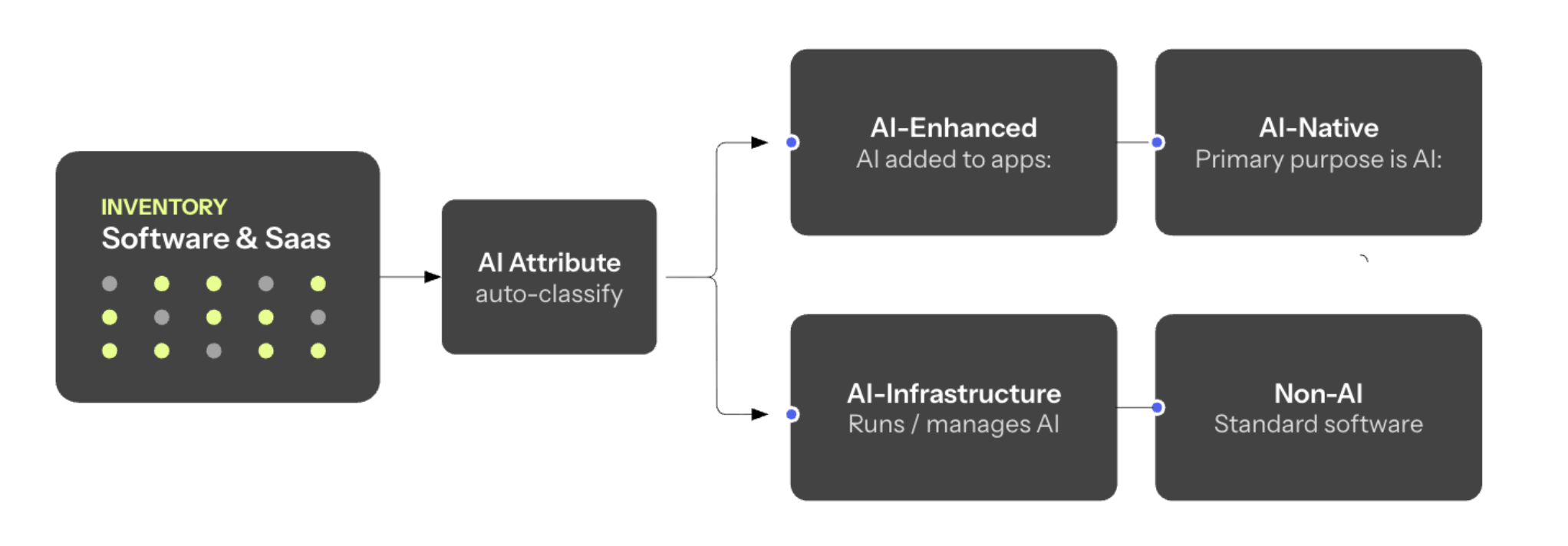
Each category carries a different risk and needs a different response. AI-native tools call for vendor review and data-use rules. AI-enhanced apps call for a second look at settings you assumed were safe. AI infrastructure calls for tight control over the identities and permissions behind what's being built.
With the added context of understanding the opt-in policy, model training location, and level of autonomy that each application's AI features use, security teams can tell which AI to sanction, which to restrict, and which to investigate first. The classification comes from adapters you already run, so you get that picture on day one.
From AI visibility to AI governance
Announced today and in preview by the end of January 2027, the next capabilities are AI Platforms Inventory and AI Application Settings. Security for AI goes deeper into where AI is built and how it's configured.
AI Platforms Inventory. AI adoption goes well beyond traditional SaaS. Enterprise teams now build and run workloads directly on dedicated AI platforms, and those platforms often operate as black boxes to security. New adapters will connect directly into these platforms to show model usage, active AI agents, guardrails, and MCP servers. Each component maps back to the human and non-human identities (NHI) operating it. You'll see who is running what, and you can keep autonomous tools limited to the access they actually need.
AI Application Settings. Finding an app is only the first step. Security teams also need to know how that app is configured. Many vendors now turn on generative AI features by default, which can quietly opt your organization into external data sharing or model training. Security for AI will read AI-specific settings directly from connected tools, showing where AI features are active and flagging policy deviations before sensitive data is exposed.
Together, these capabilities take Security for AI from knowing what AI exists to governing how AI is used, giving security teams the posture controls to keep pace with adoption.
AI assets are now part of the Axonius Asset Cloud
AI is another asset class, and it needs the same inventory rigor, visibility, and control as endpoints, cloud workloads, and compute services. Security for AI gives security teams the clarity to govern their entire AI estate with confidence.
This launch is just the start. Over the coming months, we'll keep expanding Security for AI so you can discover, understand, and secure your full AI footprint. You can't govern what you can't see. Talk to your Axonius team to see Security for AI in action.
Availability
Shadow AI Discovery is generally available to customers.
AI Platforms Inventory and AI Application Settings will be in preview by the end of January 2027.
Additional resources
Learn more about Axonius' approach to discovering and securing AI assets.
Read the press release to learn more about Shadow AI Discovery, AI Platforms Inventory, and AI Application Settings.
Categories
- Artificial Intelligence Ai
- Security

Get Started
See how to make asset intelligence actionable with a guided demo:
- Stop chasing data — work from one asset model your entire team can trust.
- See what's exposed before it's a problem — surface coverage gaps automatically.
- Turn alert noise into action — cut thousands of alerts down, to the ones that matter.