See How Cyber Resilience Works in Axonius
Step 1: Build a trusted, correlated view of your asset landscape
Getting true visibility into what actually exists in your environment, and all of the associated metadata, is the first step to strengthening your overall cyber resilience. Show connectors, data sources, and example data pulled from a source.
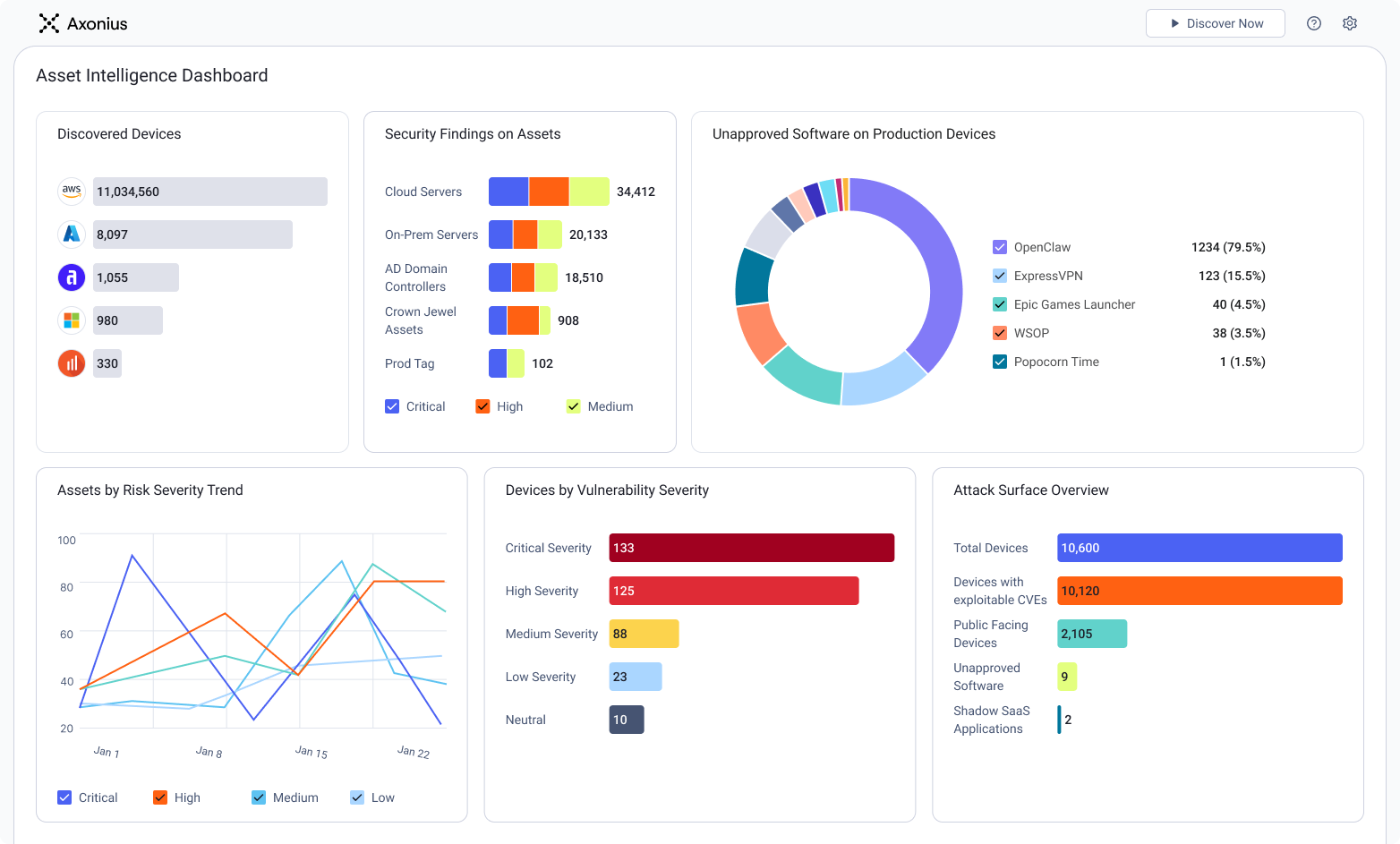
Step 2: Visualize scope with dashboards
Customizable dashboards bring relevant asset information and metadata directly to security engineers’ fingertips. Scope the information to focus preparation and tracking efforts where they can be most impactful.
Step 3: Determine asset metadata most impactful to cyber resilience
Easily identify critical asset metadata like Asset Owner or Crown Jewel tags, to ensure that this information is kept up to date and can be immediately leveraged during an event.
Step 4: Visualize relationships between assets to build resilience
In a single chart, easily combine information about Asset state, like EDR agent status, with information about appropriate compensating controls, like hard drive encryption status, to ensure that all asset scenarios adhere to resilience principles.
Step 5: Automate updates and remediation
Using the Action Center, leverage an existing Enforcement Set to update Owner metadata via a ServiceNow ticket, or customize a workflow to notify users of affected assets that their encryption is out of date, or even send off a command to install an EDR agent on an in-scope asset as a compensating control.