Adapt 2026: The security Actionability Gap is real. Here's what we're doing about it.
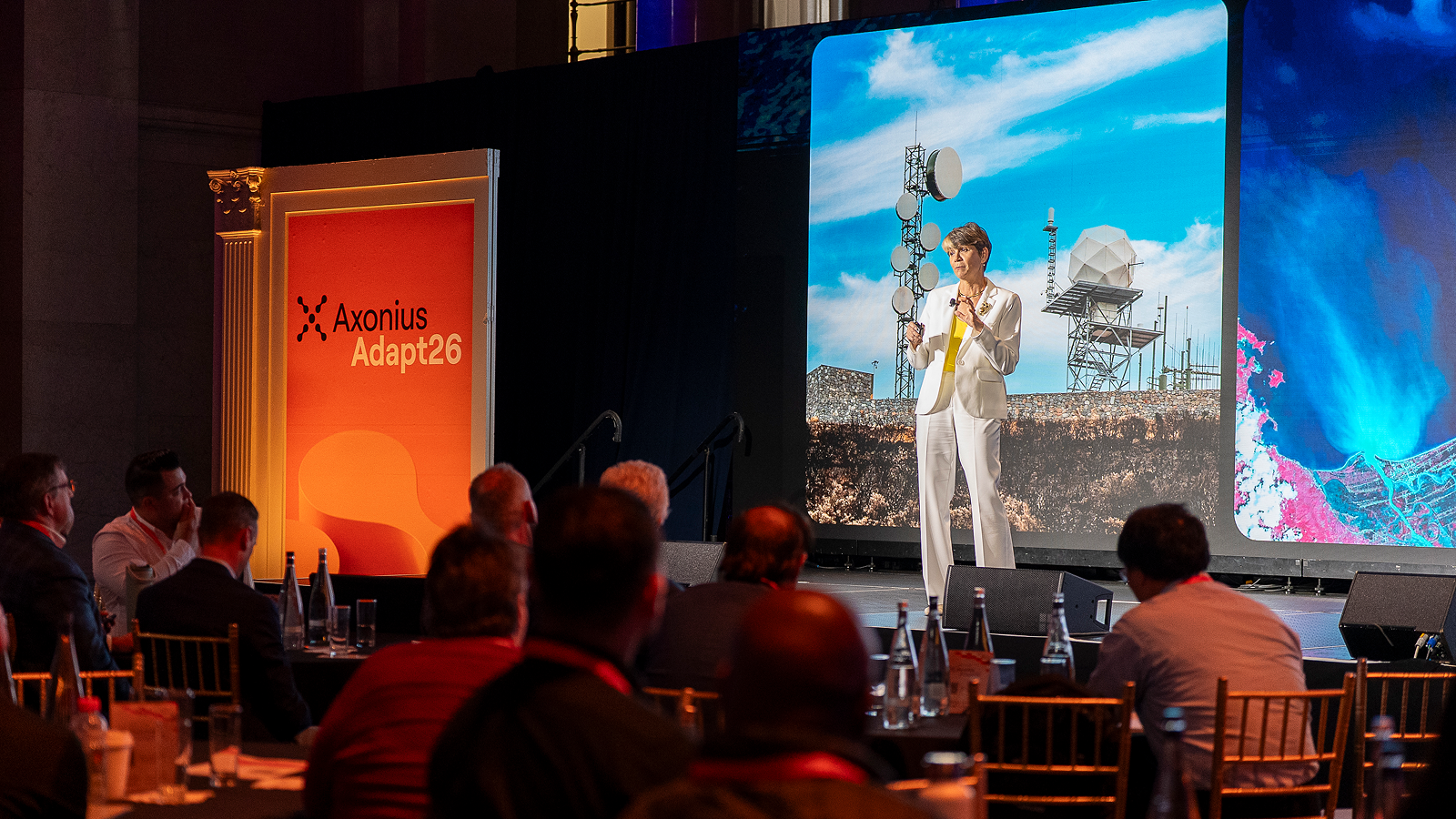
Only 23% of security teams consistently apply the context they need to prioritize effectively. More than a third still rely on fully manual remediation workflows. That's from our 2026 Actionability Report, and it illustrates an all-too-familiar dilemma: teams have the data and the tools, but not the context to do anything useful with either.
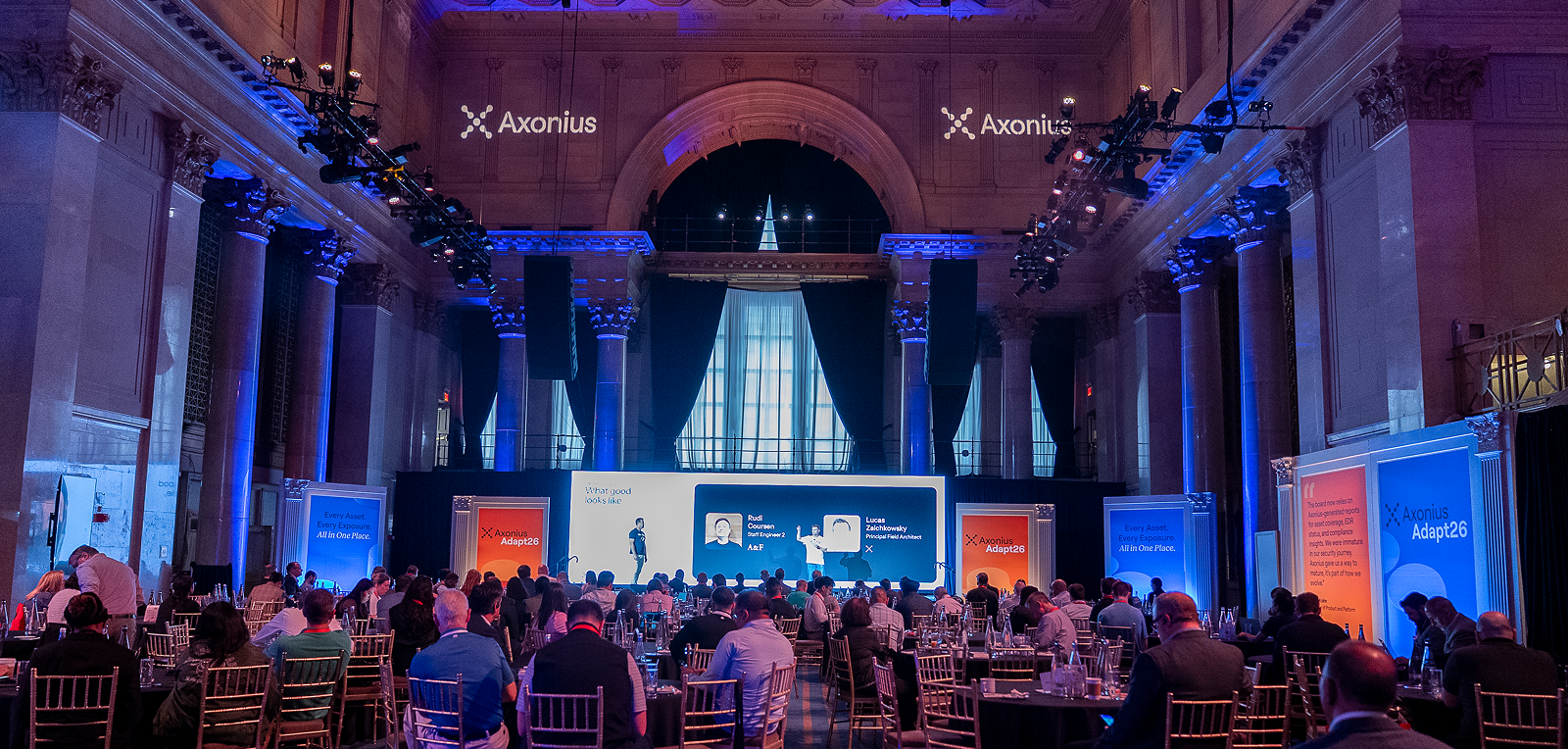
We call it the Actionability Gap: the space between detecting a risk and actually remediating it — where findings pile up, context gets lost, and teams burn out trying to close the loop. Axonius Adapt 2026, our annual cybersecurity industry and customer conference, was built around solving it.
Here's what stood out from Adapt:
The data: What 1,500+ security teams unveiled about why prioritization keeps breaking
The model: A four-beat self-healing cadence for closing the Actionability Gap
The roadmap: Verified Assets, exposure management, Cyber-Physical Assets, and AI
The practitioners: How UKG, Lionbridge, and a former NASA CIO turned asset intelligence into action
Read the highlights below, and watch the Adapt 2026 sessions now streaming on demand.
What 1,500+ security teams revealed about the Actionability Gap
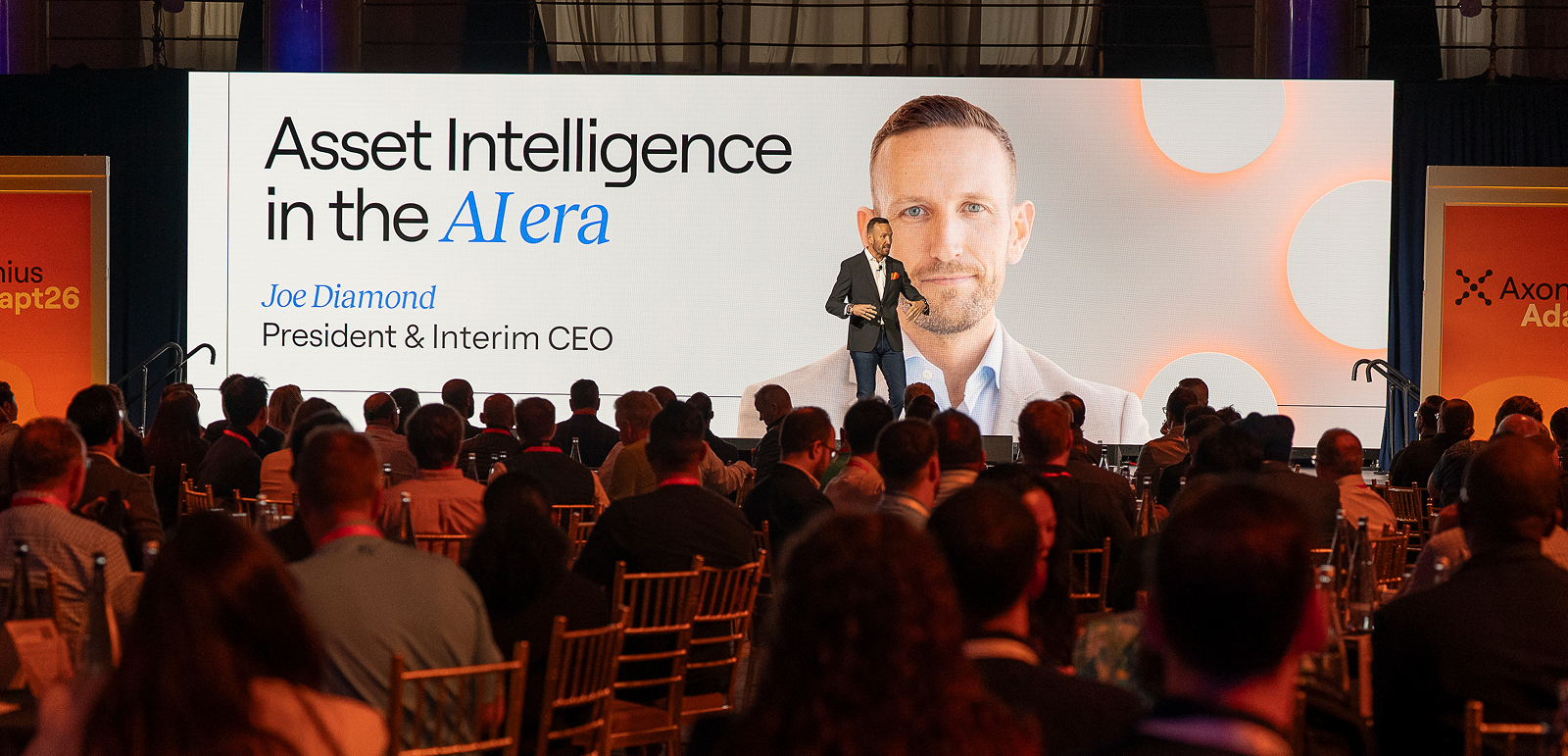
Joe Diamond, our President and Interim CEO, opened his keynote with a question most security leaders can answer but none of them like: how much of your asset data can you actually trust?
Across more than 900 Axonius customers, the median organization has nearly 298,000 devices in inventory and more than five tools reporting exposures. When we surveyed an additional 600+ security professionals for our Actionability Report, 51% said they still track assets in spreadsheets. 87% aren't reconciling that inventory daily.
High-stakes remediation calls, made on data that was probably accurate last week and almost certainly isn't now — that's a context failure operating at massive scale. The organizations that pull ahead trust the data they already have because their asset intelligence is decision-grade: reconciled across sources, continuously verified, and worth acting on without a three-day validation exercise first.
Joe introduced a four-beat self-healing cadence for actionability:
Declare good state.
Detect deviations.
Decide what matters using full asset, security, and business context.
Deliver the fix.
That cadence breaks the moment your tools stop agreeing on what's true, which is why it depends on durable context: continuous reconciliation across every source feeding your security stack into one source of truth, instead of each writing their own version of reality.
And as teams start deploying AI-driven workflows and autonomous agents, the stakes get higher. AI doesn't second-guess the data it's handed. It just acts on it. Durable context is the prerequisite: the foundation that determines whether AI accelerates good decisions or scales bad ones at machine speed.
The new Axonius Asset Cloud: Deeper asset intelligence, smarter remediation
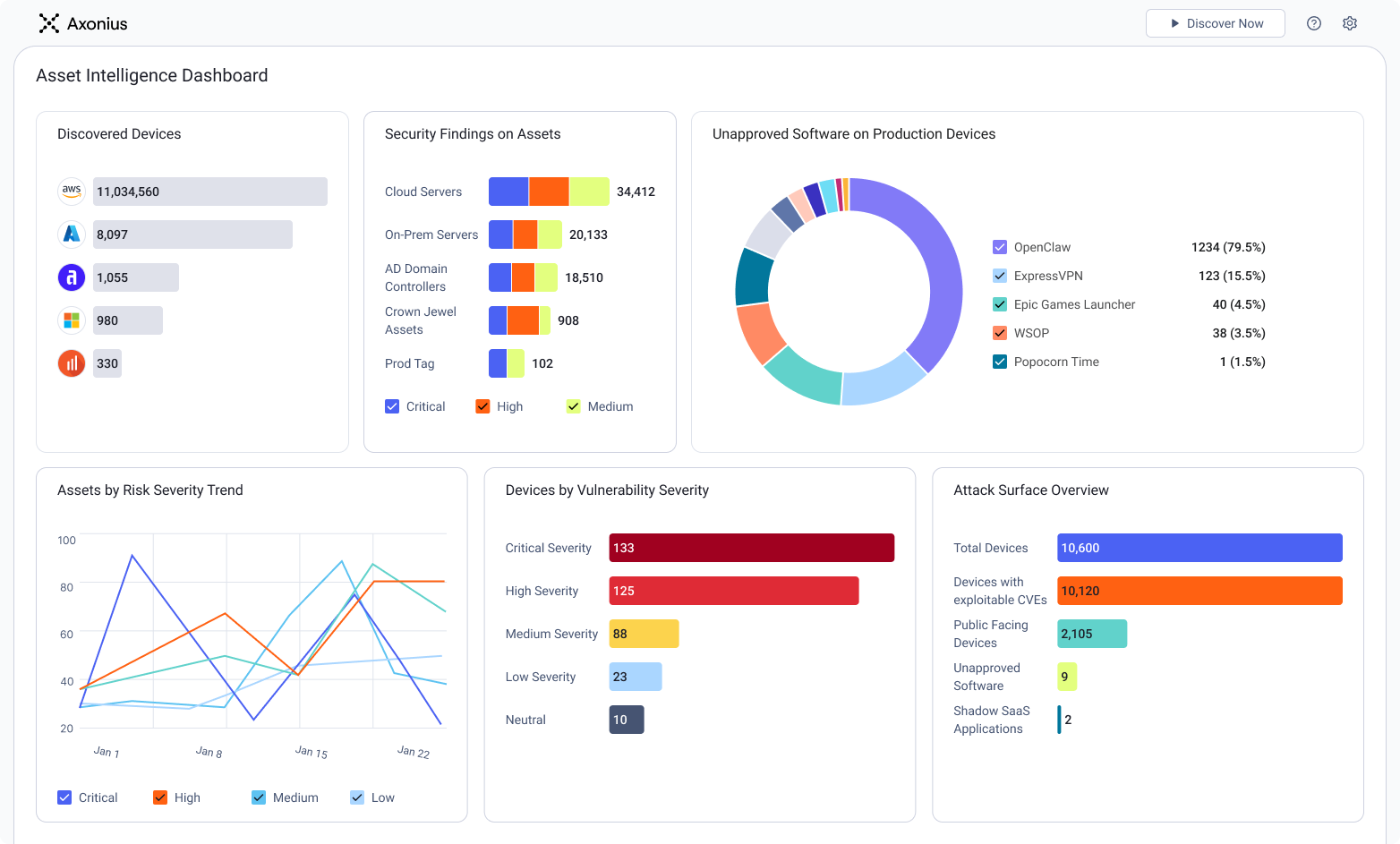
Better dashboards won't get you from detection to remediation. The platform has to do the work. Here's what's next for the Axonius Asset Cloud:
Decision-grade asset intelligence got sharper with Verified Assets: get to work immediately on known, good assets that come from automated quality gates that vet every asset for recency, identity, stability, and deduplication. Assets found from less reliable sources enter a triage workflow before they enter downstream workflows. Once you know your assets, you can get started with our most common end-to-end workflows in our new purpose-built Workspaces for agent coverage, patch management, and CMDB reconciliation. Learn more about Axonius Verified Assets.
Cross-domain exposure management moved from detection to remediation. Security Findings capture risks your scanner doesn't. Risk scoring no longer has to be either a basic CVSS or a complex black box nobody understands. Enhanced risk scoring replaces black-box numbers with a transparent model and soon will provide a default risk model that everyone can use, even if they haven’t decided on their own risk scoring algorithms yet. You can’t get issues fixed if you don’t know who owns the problems, and now Remediation Ownership maps every finding to a named owner with an SLA the moment it's discovered. Then, our new AI-recommended actions tell the owner what to do first. Learn more about updates to Axonius Exposures.
Cyber-Physical Assets (CPA) launched in early access, extending the Asset Cloud into IoT and OT, the blind spots most platforms structurally can't see. Learn more about Axonius Cyber-Physical Assets.
Strategic AI showed up on both sides: Security for AI treats AI applications, agents, and non-human identities as first-class asset types to combat Shadow AI. AI for Security introduces Axonius Agents — purpose-built AI for asset inventory, exposure triage, and incident response with human-in-the-loop approval. Learn more about Axonius AI.
Watch the full product roadmap session →
How practitioners are turning asset intelligence into outcomes
The roadmap is one thing. What matters is whether asset intelligence holds in practice. At Adapt, two organizations in completely different industries showed that it does.
Brian Caulfield, Senior Information Security Engineer at UKG — a workforce management company serving 80,000+ organizations across 150 countries — deployed Axonius four years ago after a major M&A left his team unable to confidently answer “what do we actually have?”
What followed is what he calls a cybersecurity snowball, each use case compounding on the last. An automated CrowdStrike sensor upgrade closed 100,000+ coverage gaps to near zero. Reporting time dropped from six hours to minutes. That same foundation now powers UKG's detection engineering and AI workflows.
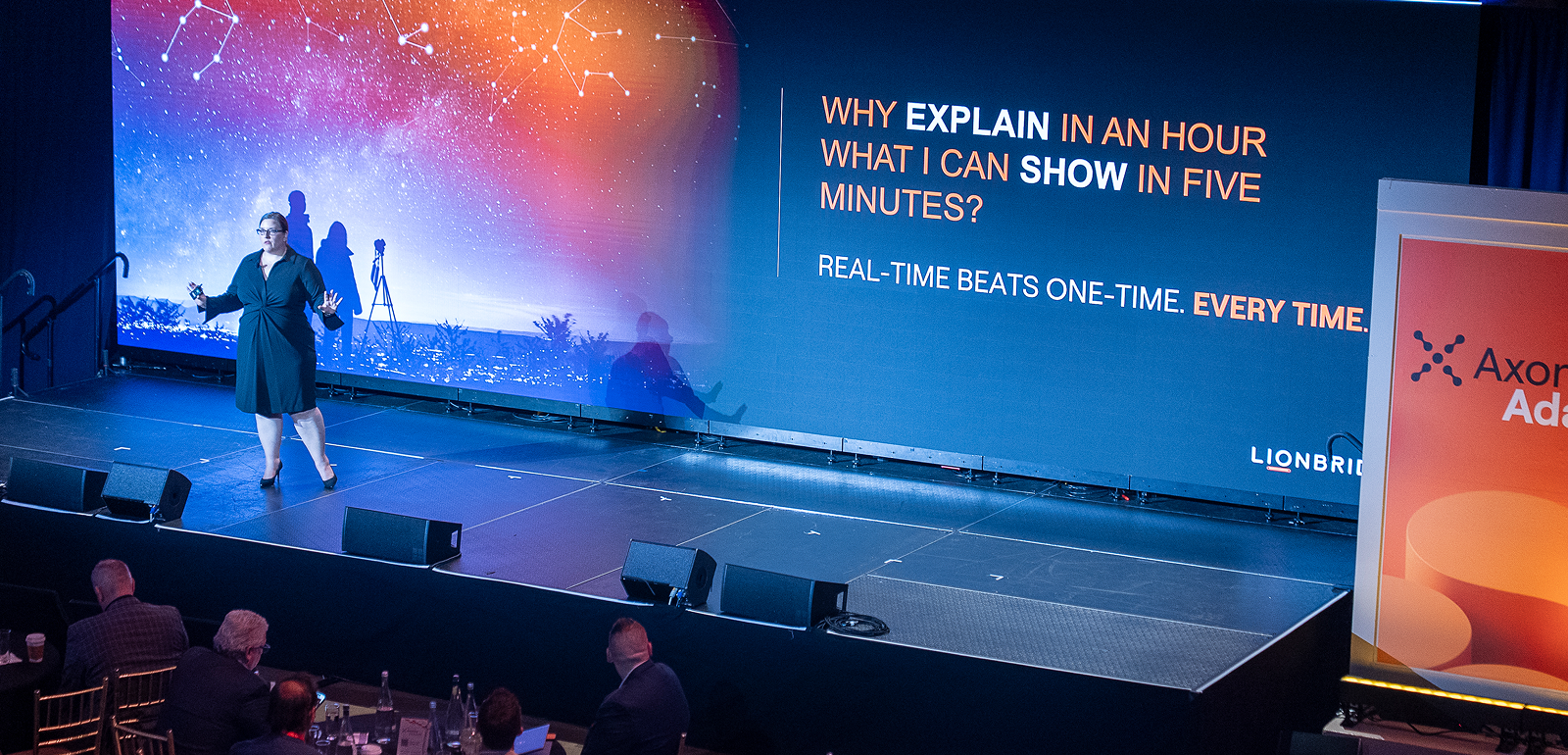
Tara Fardellone, Director of Governance, Risk, & Compliance at Lionbridge, made the case that asset intelligence is more than a security tool. It's a trust engine. Lionbridge handles localization for automotive, defense, gaming, and medical clients, industries where traditional cybersecurity isn't enough. Customers demand real proof of security posture as a condition of partnership. Her team runs over 200 audits a year, and Axonius is what lets them answer “how do I know my data is safe?” with real-time proof instead of promises.
As Tara put it: “Time is the only non-renewable resource.”
What a former NASA CIO's story means for every security team
Renee Wynn doesn't work for Axonius. She doesn't sell security products. But her story grounded everything Adapt had been building toward.
Months into her tenure as NASA's CIO, the White House declared the agency's entire cybersecurity posture a national security risk, which Renee was tasked to fix. NASA Administrator Charlie Bolden, former astronaut and former Marine Corps general, turned to her with three words: "Go make that happen."
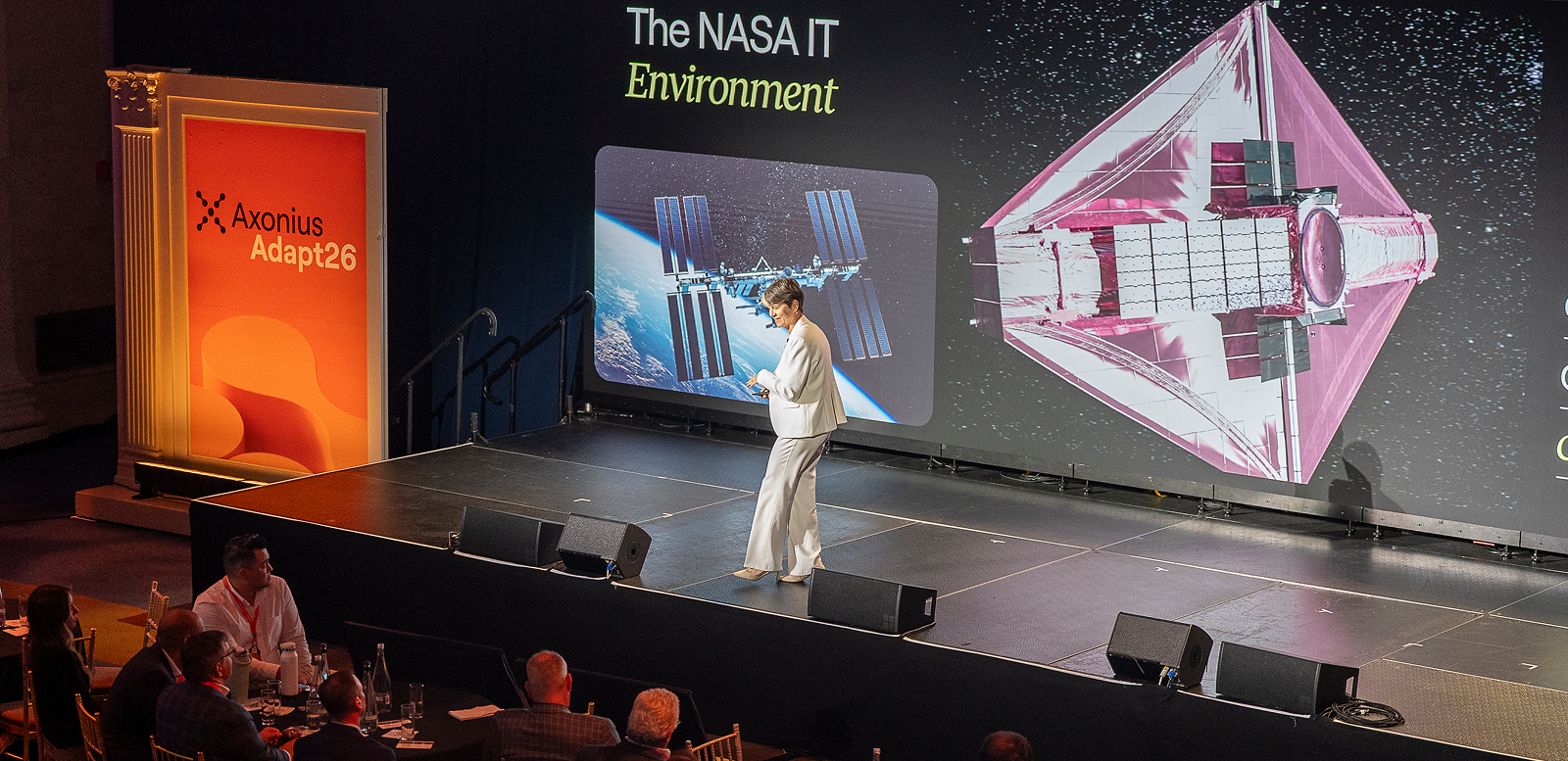
NASA’s environment is different from most, and yet their learnings are universal: 400,000 sensors on a single launch unit, 40,000 software instances, 65,000 users including international partners, and infrastructure stretching from Kennedy Space Center to the International Space Station. When her team started looking at what was actually on the network, they found Reader Rabbit, crypto mining operations, and unauthorized sites running on NASA systems.
Over the next four years, her team moved NASA from high risk to managing risk. Her starting point was the same principle every session at Adapt kept coming back to: you can't protect what you can't see, and you can't act on what you can't trust. At NASA's scale, getting either one wrong means a failed mission.
Catch everything you missed, and join us at Adapt in Action
Every session at Adapt pointed to the same conclusion from a different angle: asset intelligence built on durable context is what closes the gap between knowing and doing. That was the signal, and everything else was noise.
Adapt 2026 sessions are now available to watch on demand: start streaming Adapt sessions now.
Missed New York? We're taking Adapt on the road. Join Axonius at a city near you:
Adapt in Action DC – June 9, 2026
Adapt in Action London – June 25, 2026
Categories
- Axonius News

Get Started
See how to make asset intelligence actionable with a guided demo:
- Stop chasing data — work from one asset model your entire team can trust.
- See what's exposed before it's a problem — surface coverage gaps automatically.
- Turn alert noise into action — cut thousands of alerts down, to the ones that matter.